Books Read May 2026
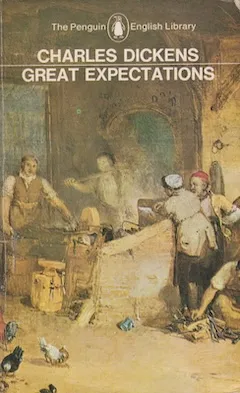
Great Expectations by Charles Dickens [reread]. I listened to the Martin Jarvis audiobook, which is superb except for his extremely Terry Jones approach to women characters. Not great with Jewish characters either; I might give his Oliver Twist a miss.
Legend by David Gemmell [reread]. An appealingly human and thoughtful low fantasy, but not so thoughtful that it excludes extensive sword fights and battles. I never felt particularly invested in the characters or story, which might explain why I couldn't remember a damn thing about it, but I did enjoy it.
Danubia by Simon Winder. Took me ages to read this idiosyncratic history of central Europe, mainly because I kept having to look up various scenic towns, scarcely credible atrocities, and still less credible Habsburg chins. Winder is like a slightly less caustic Geoff Dyer, his magpie mind always angling for a gag and very Britishly undercutting his clearly prodigious research.
The Writing Life by Annie Dillard [reread]. Probably one of the least practical books on writing ever published. Dillard is at her exuberant best (or worst, I suppose, if she rubs you the wrong way), playing chess with babies, talking to inchworms, explaining that if you're going to write you might as well write Moby Dick. It's a hugely enjoyable and inspiring firecracker of a book.
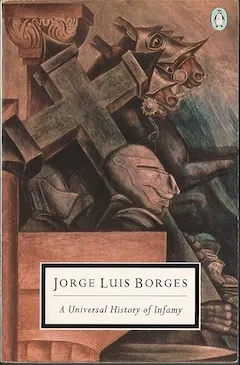
A Universal History of Iniquity by Jorge Luis Borges, translated by Andrew Hurley [reread]. Borges's first prose collection is a set of tales from the historical record told slant. A wretched hive of scum and villainy, but literary.
The Age of Innocence by Edith Wharton. The novelisation of the Scorsese movie. I kid: it's actually the 38th best novel of all time and you know what, it really is very good.
The Posthumous Memoirs of Brás Cubas by Machado de Assis, translated by Flora Thompson-DeVeaux. Shandean hijinks in 19th century Brazil. Delightful stuff, although as with Sterne, the humour is more "I'm vigorously nodding my head in acknowledgement that this is Funny" than genuinely hilarious.
19 Ways of Looking at Wang Wei and The Life of Tu Fu by Eliot Weinberger. Two slim volumes. 19 Ways examines Western translations of a four line classical Chinese poem, tracing trends in translation and the influence of classical Chinese literature on modern Western poetry. The Life of Tu Fu is another typically inventive Weinberger exercise, constructing a poetic biography of the Tang dynasty poet using his own (translated) words.
Small Things Like These by Claire Keegan. Chekhovian novella set in an oppressive Irish town in the 1980s. The Christmas setting and redemptive narrative arc lend it a fable-like quality.