Intervals of Darkness (Ray Newman)
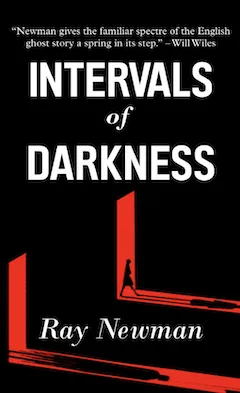
Ray Newman’s 2022 collection of weird tales, Municipal Gothic, was one of the best things I read last year; his new collection, Intervals of Darkness, is perhaps even better. I tore through it in a couple of evenings, eager to see what horrors and/or delights the next story would bring.
Newman peppers his work with playful nods to classic weird writers and cultural artefacts. “The Horns in the Earth” riffs on M.R. James’s “Oh, Whistle and I’ll Come to You, My Lad”, while “Night of the Fox” feels like cult 70s telemovie Robin Redbreast as filtered through Robert Aickman’s “The Visiting Star”. You get the impression that Newman has thought deeply about the tropes of his genre, and how they might be transposed into different temporal or socio-economic surroundings. Similarly, he engages with contemporary trends - the folk horror boom, pseudo-intellectual psychogeographical urbanism - in pointed and interesting ways.
Many of the stories are set in contemporary Britain's marginal edgelands, a landscape haunted by living ghosts: shift workers, the homeless, people living pay cheque to pay cheque, or without a pay cheque at all. Supernatural horror often stems from, or is adjacent to, the dehumanising horrors of grinding labour, poverty, and deprivation. "Industrial Byproducts", for example, takes a mundane fact - the toll a lifetime of underpaid physical graft takes on a body - and literalises the metaphor, resulting in a kind of social-(sur)realist body horror.
Formally, Newman continues to range widely, variously employing television transcript, oral history, and epistolary forms, alongside more traditional narrative. Some of my favourite stories are the tragicomic "Father Paul" (think The Exorcist but swap out the angsty Catholic priests for a hippyish Anglican vicar); "While You Were Out", which follows an overworked courier on a particularly unpleasant job; and "Winter Wonderland", the darkly funny tale of a Christmas outing gone very wrong. Then there's "The Pallbearers", a five page fable that is among the most chilling and memorable in the book.
For all the darkness (and intervals thereof), this is an often drily witty book, and not without moments of genuine, albeit grotesque, beauty. This is the opening of the first story, "Poor Ned's Head":
My skull sat in the silt of Mount’s Bay, amid the broken ribs of the Faerie, for more than three hundred years. There too, in that pan of brown bone, like a hermit crab haunted I.
Philosophers have long supposed the soul to repose in the heart or lungs, if indeed it can be said to exist anywhere. The brain is to them so much wet cheese. Why, then, do we fear the human skull? Because when the flesh has gone, eaten by tiddler fish or washed away in a hundred tides, the skull is the caretaker of the essence. It looks back at us.
Who could resist reading on?
Intervals of Darkness is available worldwide from Amazon, as is Municipal Gothic. Ray is on Bluesky, and he also has a blog.